Resolve connected projects before the tear-off
Tell your roofer about planned solar panels, skylight changes, gutter work, or exterior remodeling. These projects may affect penetrations, flashing, roof edges, and scheduling. Coordinating them early can avoid disturbing newly installed roofing shortly after completion.
Compare repair with replacement based on observed condition and your plans for the house. A single failed detail does not automatically justify a complete reroof, while repeated failures across worn materials may make patching less practical. Ask for photos and an explanation of why the recommended scope suits the roof you have.
Agree on access and unexpected conditions
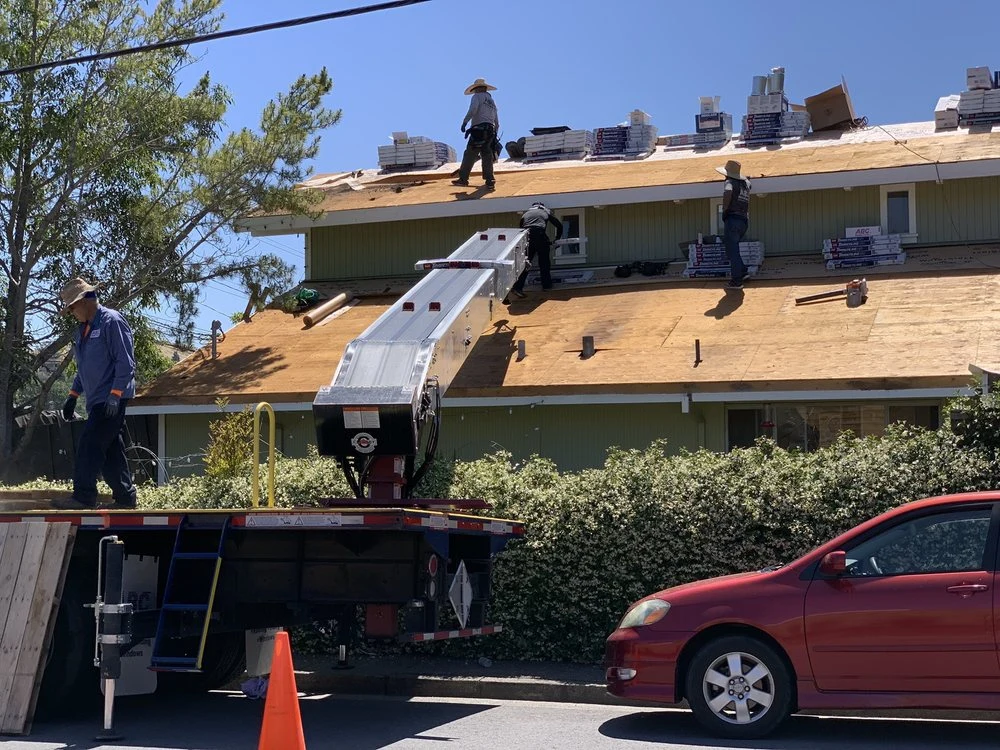
Discuss where deliveries and debris containers will be placed and whether vehicles need to move. Hillside sites, narrow driveways, and limited street access can change the logistics. Make arrangements for pets, household routines, and communication during noisy work. Confirm how landscaping and vulnerable areas will be protected.
Removing old roofing may reveal damaged decking that was not visible during the estimate. The proposal should explain how that condition will be documented, what pricing basis applies, and how you approve additional work. Ask who will contact you and how quickly a decision is needed while the roof is open.
Plan for weather and a documented finish
Ask how much roofing will be opened at a time and how the crew will protect exposed areas if conditions change. Schedule estimates should allow for weather, material delivery, concealed repairs, and any required inspections. A realistic sequence is more useful than an unconditional completion promise.
Confirm permit and inspection responsibilities with the contractor and the relevant building authority for your address. At handover, request product information, warranty terms, final photos, and any applicable inspection records. Walk through cleanup and drainage observations, and make sure you understand how to report a concern after installation.