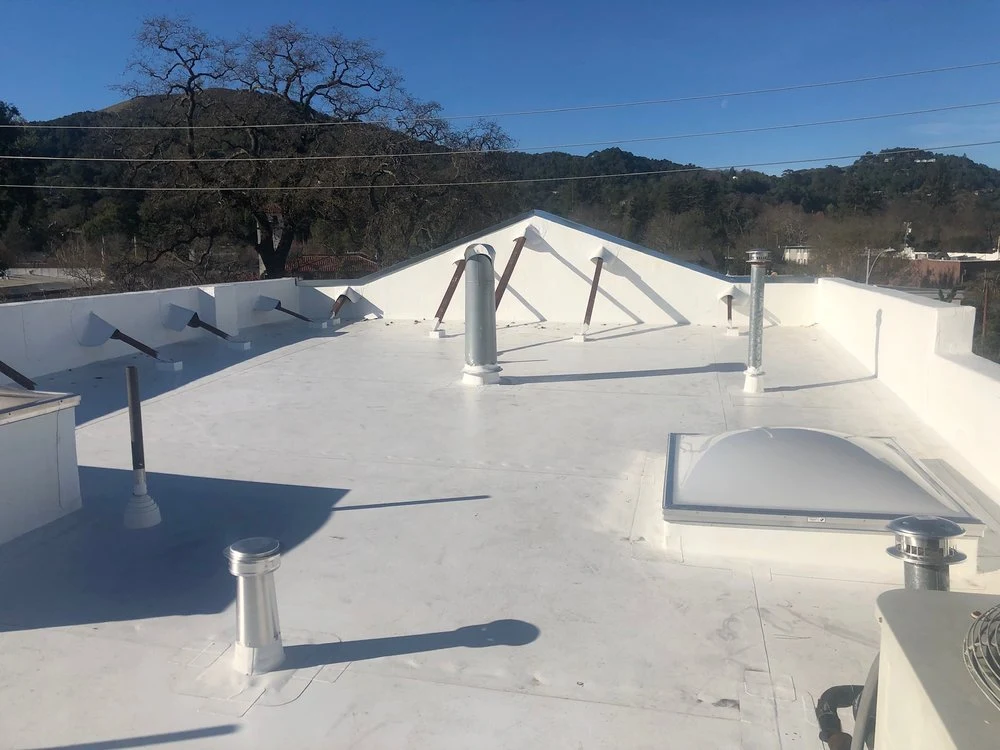
Understand how water leaves the roof
The term flat roof usually describes a low-slope roof, not a roof designed to hold water. Ask the roofer to explain where runoff goes and how drains, scuppers, gutters, or other outlets function together. Debris at a small opening can affect a much larger roof area.
If water remains after rain, record the location from a safe vantage point. Persistent ponding needs investigation into drainage, slope, and underlying conditions. A new coating alone does not change the geometry that causes water to collect. Ask whether the estimate addresses the cause or only renews the surface.
Identify the membrane before planning a repair
Low-slope roofs can use different materials with different seam and repair methods. The existing roof should be identified before choosing patches, adhesives, or coatings. Incompatible products can make future work harder, even when an initial patch appears to cover the visible opening.
Pay particular attention to equipment curbs, vent pipes, roof edges, and wall transitions. Movement and concentrated runoff can expose weaknesses at these locations. Ask for photographs and a description of the failed detail. If there are signs of moisture below the surface, discuss how the affected area will be assessed before it is covered again.
Compare repair, recovery, and replacement carefully
A localized repair may suit a sound roof with an isolated defect. More extensive work may be appropriate when deterioration is widespread or the underlying assembly is wet or damaged. A surface-only assessment cannot confirm every concealed condition, so ask what further investigation is needed.
If a coating or roof recovery is proposed, request a written explanation of substrate suitability, preparation, drainage corrections, and product limitations. Discuss rooftop equipment access and protection during future service visits. Keep a roof plan showing drains and penetrations so maintenance crews know which areas require particular care.