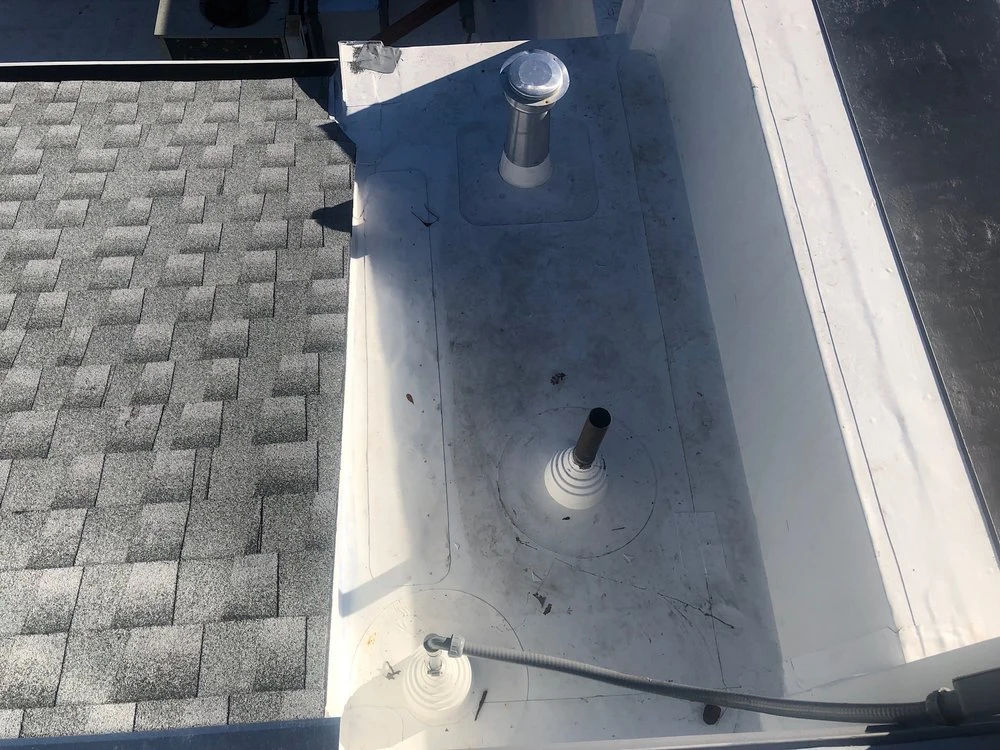
Observe where water leaves its intended path
During rain, observations from a safe sheltered location can be useful. Note whether water spills over a gutter edge, appears behind the gutter, or backs up near an outlet. These patterns can point to different problems. Share photos or a description with the roofer rather than entering the roof to investigate.
Roof valleys concentrate runoff from multiple planes. A small area at the bottom of a valley may handle more water than a much longer straight roof edge. Ask whether concentrated flow, accumulated leaves, or a detail at the transition explains the overflow. The solution should fit the source of the problem.
Treat the roof edge as a working detail
The relationship between the roof covering, edge metal, fascia, and gutter affects where water goes. A roof replacement should account for this connection even when existing gutters remain. Ask whether the edge detail will be renewed and whether the gutters need adjustment, protection, repair, or replacement.
Deteriorated fascia or staining behind a gutter should be assessed before it is concealed by new work. Repairing the gutter alone may leave another damaged component untouched. Make sure the scope distinguishes roofing, gutter work, and any carpentry so responsibilities are clear.
Continue the conversation beyond the downspout
Downspouts move roof runoff to a discharge point, but that point still needs to suit the property. Water released beside a vulnerable wall or onto a path may create a separate concern. Site drainage can require a different contractor or design review beyond the roof and gutters.
Keep outlets accessible for maintenance and note where underground connections go if known. When an outlet repeatedly backs up, ask whether the blockage is in the gutter, downspout, or downstream connection. A maintenance plan should include the full accessible path rather than clearing only the visible gutter trough.